



Dreusicke offers the fine tools you will need for the maintenance and repair of office machines, computers, electronic and/or fine-mechanical devices. (for commercial users only)



Part list
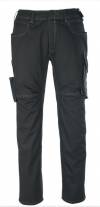
Available in the following sizes:
in stride length 82cm from C42 to C68
in stride length 90cm from C46 to C62
Part list
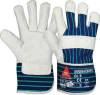
Category: II
Abrasion resistance: 3
Tear propagation resistance: 3
Puncture resistance: 2
Cut resistance (cutting test): 2
Type: with molleton lining
Standard: EN 388
Length approx.: 280 mm
Colour: blue
Size: 10
Material: full-grain cow leather

Part list
Part list
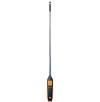
Measurement of air velocity, temperature, and volume flow. Combined with a smartphone or tablet, the testo 405i thermal anemometer becomes a compact measuring instrument for air velocities, temperatures, and volume flows. Equipped with a telescopic shaft that extends up to 400 mm, it allows for flexible use in rooms and ducts. Using the testo Smart Probes App installed on their mobile device, users can conveniently read measurements, quickly and easily configure volume flow measurements, and reliably determine timed and multi-point averages. Finally, measurement data reports can be sent directly as PDF or Excel files. When used in conjunction with the testo 605i thermo-hygrometer, the testo 405i is also suitable for determining cooling and heating output.
Technical data:
Wind velocity resolution: 0.01 m/s
Height: 41 mm
Width: 30 mm
Temperature measurement range: -20 to +60°C
Length (depth): 200 mm
Temperature measurement range (max.): +60°C
Wind velocity measurement range (min.): 0 m/s
Wind velocity measurement range (max.): 30 m/s
Temperature measurement range (min.): -20°C